· Akira Agent
AI follow-up agents: turn finished jobs into reviews, repeat bookings, and saved customers
Many service businesses stop too early after the job is done. An AI follow-up agent can request feedback, detect unhappy customers, prompt repeat bookings, and escalate issues before they become public complaints.
A lot of service businesses treat follow-up as optional. The job is done, the invoice is sent, and the team moves on.
That is understandable. Staff are busy. But the days after a job are where repeat bookings, reviews, referrals, complaints, and maintenance reminders either happen or disappear.
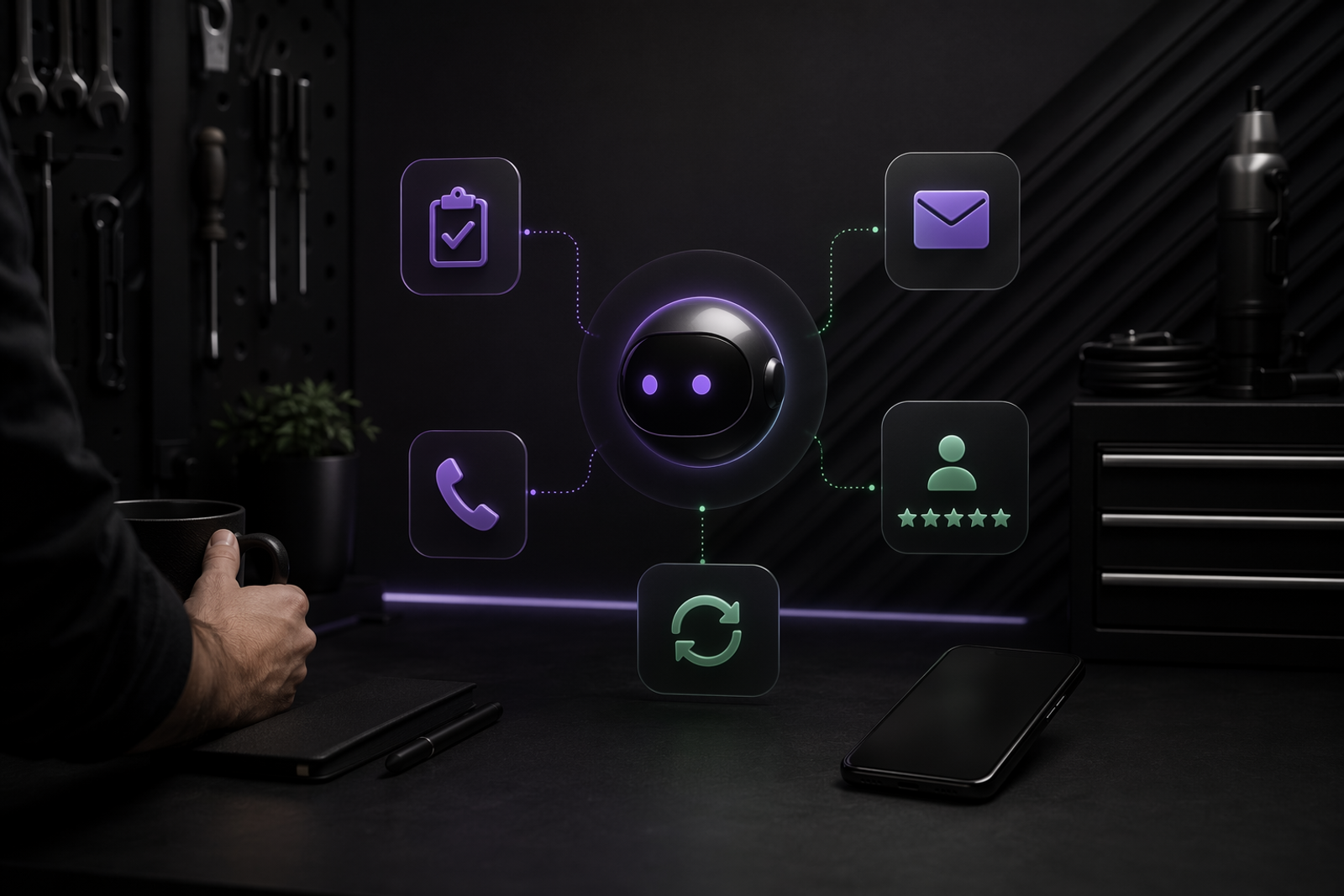
An AI follow-up agent can handle that gap. It can send the right message at the right time, ask whether the job was completed properly, request a review when appropriate, detect unhappy customers, and create a human task when the conversation needs care.
This is not about pestering customers. It is about building a reliable post-service workflow.
The hidden workflow after the job
For many businesses, follow-up is inconsistent because nobody owns it.
A cleaner finishes a job. A plumber fixes a leak. A consultant completes an onboarding call. A restaurant hosts an event. If the customer is happy, they might leave a review or book again. If they are unhappy, they might say nothing until the complaint becomes public.
A structured follow-up flow catches both outcomes.
It can ask:
- Was the work completed as expected?
- Do you need anything adjusted?
- Would you like to book the next visit?
- Should we remind you about maintenance later?
- If everything went well, would you consider leaving a review?
The AI handles timing, consistency, and routing. Humans handle sensitive responses.
Review requests need rules
Google publishes guidance for asking customers for reviews: https://support.google.com/business/answer/3474122. Google also publishes policies for prohibited and restricted content: https://support.google.com/contributionpolicy/answer/7400114.
The safe takeaway is simple: ask real customers for honest feedback. Do not fake reviews. Do not pressure customers. Do not build a workflow that only routes happy customers to a public review page while hiding unhappy customers.
A good AI follow-up agent should not manipulate reviews. It should detect satisfaction, ask for feedback, and escalate problems. If the customer is happy, it can send the correct review link. If the customer is unhappy, it should create a task for staff to fix the issue.
Customer recovery is often more valuable than the review
Reviews matter, but recovery can matter more.
If a customer replies, "The technician was late and the problem is still there," the AI should not keep pushing for a rating. It should apologize in approved language, collect the facts, and alert the team.
That gives the business a chance to fix the issue before it becomes a lost customer or a public complaint.
The AI does not need to solve the complaint. It needs to recognize that this is no longer a standard follow-up.
Repeat bookings and reminders
For service businesses with recurring needs, follow-up can also create repeat revenue.
Examples:
- cleaning companies reminding customers about the next visit
- HVAC teams sending seasonal maintenance reminders
- salons and clinics prompting rebooking
- agencies checking whether a client needs the next monthly task
- real estate teams following up after a showing
- restaurants following up after a group booking or event
The best reminders are specific and useful. "Do you want to book again?" is weak. "Would you like the same two-hour cleaning slot next month?" is better.
GDPR and consent
Follow-up messages involve customer data and communication preferences. The Swedish Authority for Privacy Protection publishes GDPR guidance here: https://www.imy.se/en/organisations/data-protection/. The European Data Protection Board also has guidance on consent under GDPR: https://www.edpb.europa.eu/our-work-tools/our-documents/guidelines/guidelines-052020-consent-under-regulation-2016679_en.
Do not treat consent as a checkbox you can ignore. A follow-up agent should respect opt-outs, avoid unnecessary data collection, and send messages only through approved channels.
If marketing messages are involved, be extra careful. Konsumentverket has marketing guidance for businesses here: https://www.konsumentverket.se/omrade/marknadsforing/.
What the AI should send to your team
For every important follow-up, the AI should create a structured note.
Useful fields include:
- customer name and contact details
- service completed
- follow-up date
- customer sentiment or answer
- complaint or issue summary
- repeat booking interest
- review request status
- recommended next action
That turns follow-up from a vague habit into an operational queue.
Metrics to track
Avoid fake ROI claims. Track simple numbers instead:
- follow-up messages sent
- replies received
- unhappy replies detected
- issues escalated
- repeat booking requests
- review links sent
- reviews received
- opt-outs
After a month, you will know whether follow-up is worth automating more deeply.
Internal links for the next step
If your bigger issue is first response, start with the closest service workflow page: https://www.akira-agent.com/hospitality, https://www.akira-agent.com/installers, or https://www.akira-agent.com/agencies.
If you need to choose the first workflow to automate, read https://www.akira-agent.com/blog/custom-ai-agents-in-stockholm-what-service-businesses-should-automate-first.
If privacy is the concern, use https://www.akira-agent.com/blog/gdpr-safe-ai-agents-sweden-service-business-checklist.
Agency teams can also start at https://www.akira-agent.com/agencies, and ecommerce teams at https://www.akira-agent.com/ecommerce.
Book the audit
In a 30-minute audit, we can map what happens after your service is delivered: who follows up, what gets missed, which messages are allowed, and when a human should step in. If there is a repeatable workflow hiding there, it is often a good AI agent candidate.