· Akira Agent
How service businesses can show up in AI search results, and where AI agents fit
AI search visibility is not magic. Service businesses need clear service pages, accurate local data, useful answers, and workflows that respond when those answers turn into leads.
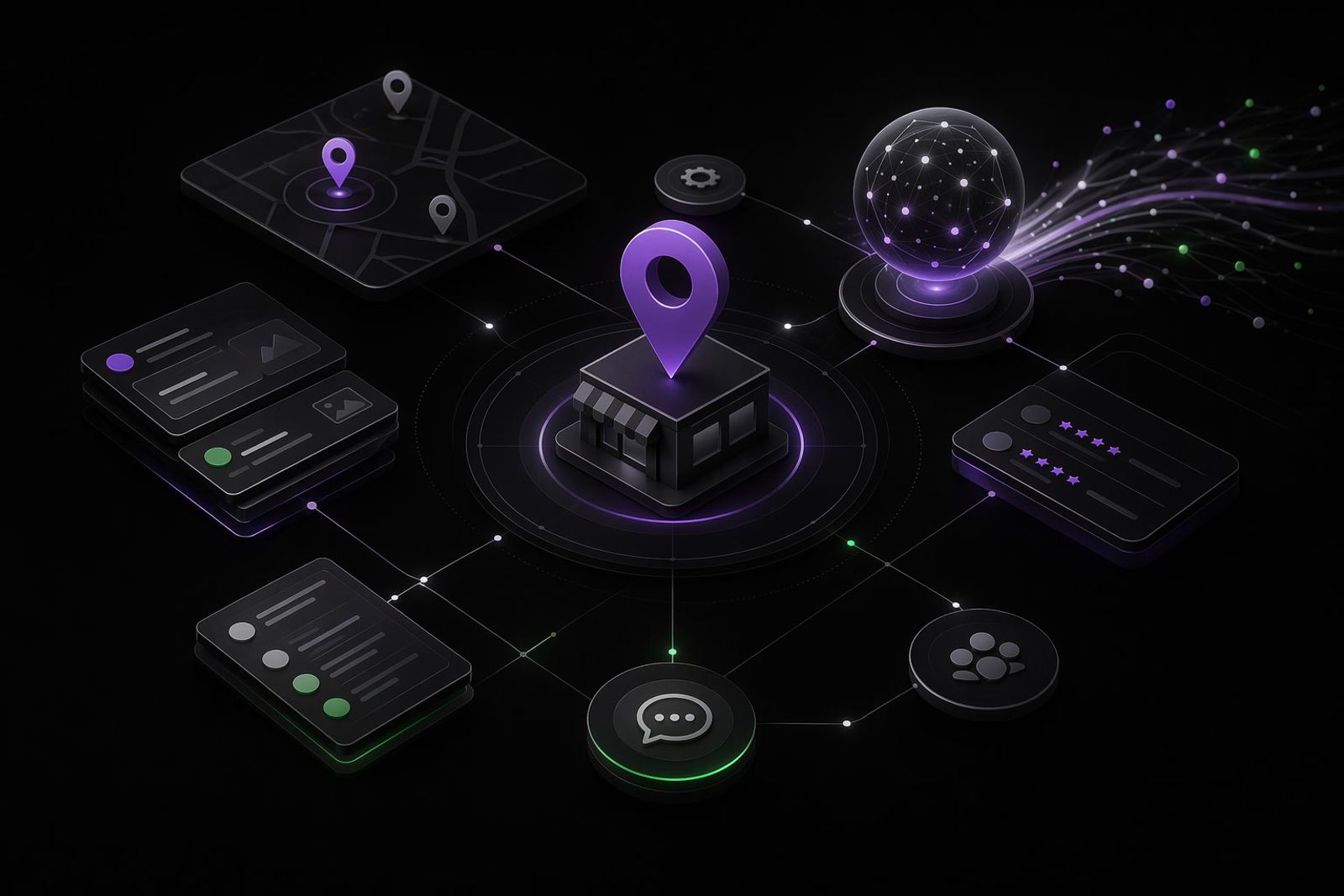
AI search is still search. It just punishes vague websites faster
Service businesses are starting to ask a fair question: how do we show up when customers use AI search, AI Overviews, chat-style answers, or whatever comes next?
The boring answer is still the useful one. Make it easy for machines and humans to understand who you serve, where you work, what you do, what proof you have, and how a lead should contact you.
AI search optimization is not a bag of tricks. For most service businesses, it is clear pages, consistent local data, useful answers, structured information, reviews, and fast lead response.
That last part is where AI agents fit.
What Google actually says about AI content
Google has said that appropriate use of AI or automation is not against its guidelines, as long as content is helpful and not created mainly to manipulate rankings. The clearest source is Google's own note on AI-generated content and Search.
Google's Search Essentials still matter: crawlability, indexability, useful content, and avoiding spammy behaviour.
So no, publishing 200 thin AI pages for every suburb is not a strategy. It is a mess.
What AI answer systems need to understand
A service business should make these facts painfully clear:
- company name
- service categories
- service area
- languages
- who the service is for
- common problems solved
- pricing or quote process, if possible
- opening hours and response expectations
- proof: reviews, cases, credentials, photos, examples
- contact path
If those facts are buried in vague homepage copy, both people and machines struggle.
Service pages beat generic service lists
A page that says "we offer installation, repairs and consulting" is weak. A page that explains one service, who needs it, what the process looks like, what affects price, and when to call is stronger.
For Akira, industry pages like real estate, ecommerce, and agencies make the offer easier to understand because they connect AI agents to actual workflows.
Your service business should do the same. A cleaning company, installer, recruitment firm or clinic should not rely on one generic "services" paragraph.
Structured data helps, but it does not rescue thin content
Google's introduction to structured data explains how markup can help Google understand a page. Schema.org also defines types such as LocalBusiness and Service.
Useful structured data can reinforce what is already visible on the page. It should not say things the page does not say.
For service businesses, common structured data candidates include:
- LocalBusiness
- Service
- Organization
- FAQPage, when the FAQ is actually on the page and follows current search guidelines
- BreadcrumbList
- Review or AggregateRating only when eligible and accurate
Ask a developer to implement it carefully. Bad markup can create more noise than value.
Google Business Profile still matters
If you serve local customers, your Google Business Profile is part of the story. Google's Business Profile guidelines cover how businesses should represent themselves.
Keep the basics accurate:
- name
- category
- address or service area
- phone
- website
- opening hours
- services
- photos
- review responses
AI search systems draw from many sources. Inconsistent business information makes you harder to trust.
Answer-first content works for humans too
If a customer asks "Can an AI receptionist book property viewings?", do not start with a 700-word history of AI. Answer the question, then explain the workflow, risks and next step.
That format helps search. It also respects the reader.
A strong answer page usually includes:
- direct answer in the first paragraph
- who it is for
- when it works
- when it does not
- cost or decision math
- checklist
- internal links to related services
- clear CTA
Where AI agents fit into search visibility
Traffic is not the goal. Qualified conversations are.
If your pages start showing up in AI answers and local search, the next problem is response. What happens when the lead calls after hours? What happens when five quote requests arrive with missing details? What happens when every inquiry needs the same first three questions?
That is where an AI agent can turn visibility into operations:
- answer calls from search leads
- qualify the request
- ask for missing details
- route to the right person
- book a meeting or callback
- write a CRM note
- follow up if the lead goes quiet
Akira's guide to AI receptionists vs virtual assistants vs call centers is useful if your search leads mostly arrive by phone.
A simple AI-search audit for service businesses
Review one service line and ask:
- Does the page clearly name the service and location?
- Does it answer the top five buyer questions?
- Does it explain when the service is not a fit?
- Does it include proof?
- Are contact details consistent across the site and Google Business Profile?
- Is the page crawlable and indexable?
- Does structured data match the visible content?
- Is there a fast response workflow when a lead arrives?
The last question is the one people forget. Visibility without follow-up just creates more leakage.
Book the audit
If your service business wants better AI search visibility and a better way to handle the leads that come from it, book the 30-minute Akira Agent audit.
We will review one service workflow, identify where leads leak, define handoff rules, and decide whether an AI agent belongs in the response path.