· Akira Agent
AI quote intake for home service companies: from first call to qualified job request
Home service teams lose time when quote requests arrive half-complete. This guide shows how an AI quote intake agent can collect the right details, qualify jobs, and hand clean handoffs to staff.
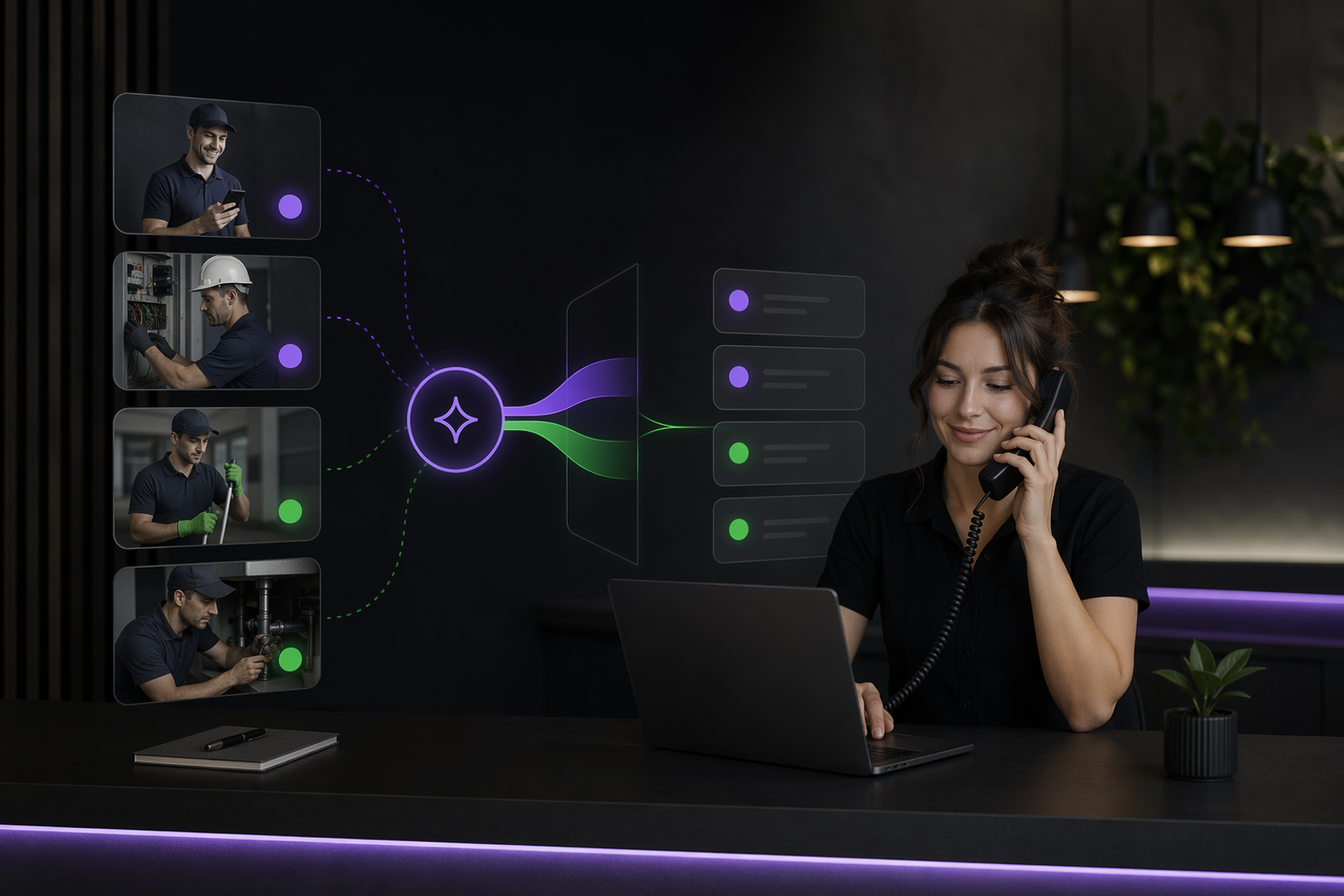
A quote request sounds simple until you look at what staff actually receive.
"Can you come tomorrow?" No address. No photos. No clear problem. No access details. Sometimes no phone number that works. A plumber, electrician, cleaner, installer, or field-service company can lose half a day chasing basic information before anyone can decide whether the job is worth quoting.
An AI quote intake agent helps by doing the boring first pass. It answers the call or message, asks the same good questions every time, collects the details your team needs, and creates a clean handoff for the person who will price or schedule the job. It should not invent prices. It should not make unsafe promises. It should turn messy inbound demand into usable job requests.
For installers and contractors, this is often a better first AI project than a broad "AI chatbot". The workflow is narrow, measurable, and tied to revenue.
Where quote requests break down
Most quote workflows fail in a few predictable places.
The customer calls while the team is on a job. They leave a vague voicemail, or they do not leave one at all. A staff member calls back hours later and asks for the details again. The customer has already contacted another company.
Or the lead arrives through a form with missing information. Someone has to ask for photos, measurements, address, property access, urgency, and preferred time. That back-and-forth might be fine for one job. At twenty requests a week, it becomes admin drag.
For local businesses, speed also affects conversion. Harvard Business Review reported in "The Short Life of Online Sales Leads" that companies responding to online leads within one hour were far more likely to qualify the lead than companies that waited longer: https://hbr.org/2011/03/the-short-life-of-online-sales-leads. The exact lift will vary by industry, but the principle is hard to ignore. Fast follow-up wins more conversations.
What an AI quote intake agent should collect
A useful quote intake agent does not ask random questions. It follows a script built around your actual quoting process.
For a home-service company, that usually means collecting:
- name, phone, email, and preferred contact method
- service address and service area
- problem type and urgency
- photos, descriptions, or measurements when useful
- preferred appointment windows
- access instructions, parking, gate codes, or tenant contact
- whether the customer is the owner, tenant, property manager, or buyer
- whether the request may involve ROT or RUT details in Sweden
- consent for follow-up and any relevant communication preferences
The AI can then send a structured summary into your CRM, job system, shared inbox, or calendar. A staff member opens the request and sees the essentials instead of piecing together a voicemail, a form entry, and three emails.
What it should not do
This is where many AI projects go wrong. A quote intake agent should not pretend to be a licensed tradesperson. It should not diagnose dangerous electrical problems. It should not promise a final price when your team has not inspected the job. It should not give legal, tax, or safety advice.
A better rule is simple: the AI gathers, qualifies, and routes. Humans quote, approve, and handle edge cases.
That split keeps the workflow useful without letting automation drift into decisions that need judgment.
A Swedish example: ROT/RUT makes intake more structured
For Swedish home-service companies, quote intake can also touch administrative details. Skatteverket explains ROT and RUT work here: https://www.skatteverket.se/servicelankar/otherlanguages/inenglish/individualsandemployees/workandemploymentinsweden/rotandrutwork.4.2cf1b5cd163796a5c8b4295.html.
An AI agent should not decide tax eligibility. It can, however, collect the details your staff normally need before checking a job: customer name, property address, type of work, and whether the customer expects ROT/RUT to be considered. That makes the human review faster.
The same applies to privacy. Addresses, phone numbers, photos, and job notes are personal data. The Swedish Authority for Privacy Protection has GDPR guidance for organizations here: https://www.imy.se/en/organisations/data-protection/. A quote intake agent should collect only the information needed for the job, store it in the right system, and make it clear how the business will use the information.
The decision math
You can estimate whether quote intake is worth automating without pretending to know the exact ROI.
Start with four numbers:
- quote requests per month
- average admin minutes per request before anyone can qualify it
- staff cost per hour
- gross profit per won job
If you handle 120 quote requests per month and spend 8 minutes cleaning up each one, that is 16 hours of admin time. If the AI also helps you respond faster and save even a few extra good leads per month, the value can move beyond time savings.
The important word is "good". The goal is not more leads. It is more complete, qualified requests your team can act on.
A practical launch scope
Do not start with every possible customer question. Start with one intake path.
For example:
- emergency plumbing request
- electrical inspection request
- heat pump installation quote
- cleaning service inquiry
- solar panel consultation
- window installation quote
Map the questions your best staff member would ask. Decide which answers are required before a handoff. Decide which answers trigger human review immediately. Connect the output to the tool your team already uses.
That is the kind of project Akira Agent usually looks for in a 30-minute audit: a painful workflow with enough repetition to automate, but clear human checkpoints where judgment matters.
Internal links for the next step
If missed calls are the bigger problem, start with Akira's installer workflow page: https://www.akira-agent.com/installers.
If you are choosing your first automation project, start with https://www.akira-agent.com/blog/custom-ai-agents-in-stockholm-what-service-businesses-should-automate-first.
If GDPR risk is slowing you down, use https://www.akira-agent.com/blog/gdpr-safe-ai-agents-sweden-service-business-checklist.
Akira also has a dedicated page for installers and field-service teams: https://www.akira-agent.com/installers.
Book the audit
Bring us your last 20 quote requests. In a 30-minute audit, we can usually see where the intake breaks: missing information, slow callbacks, weak qualification, or too much manual copy-paste. Then we can tell you whether an AI quote intake agent is worth building, and what it should hand off to your team.