· Akira Agent
How much does a custom AI agent cost? Subscription, hosting, and what service businesses should budget for
A practical guide to AI agent pricing for service businesses: subscription models, hosting, token costs, integrations, GDPR work, and ongoing improvement.
How much does a custom AI agent cost?
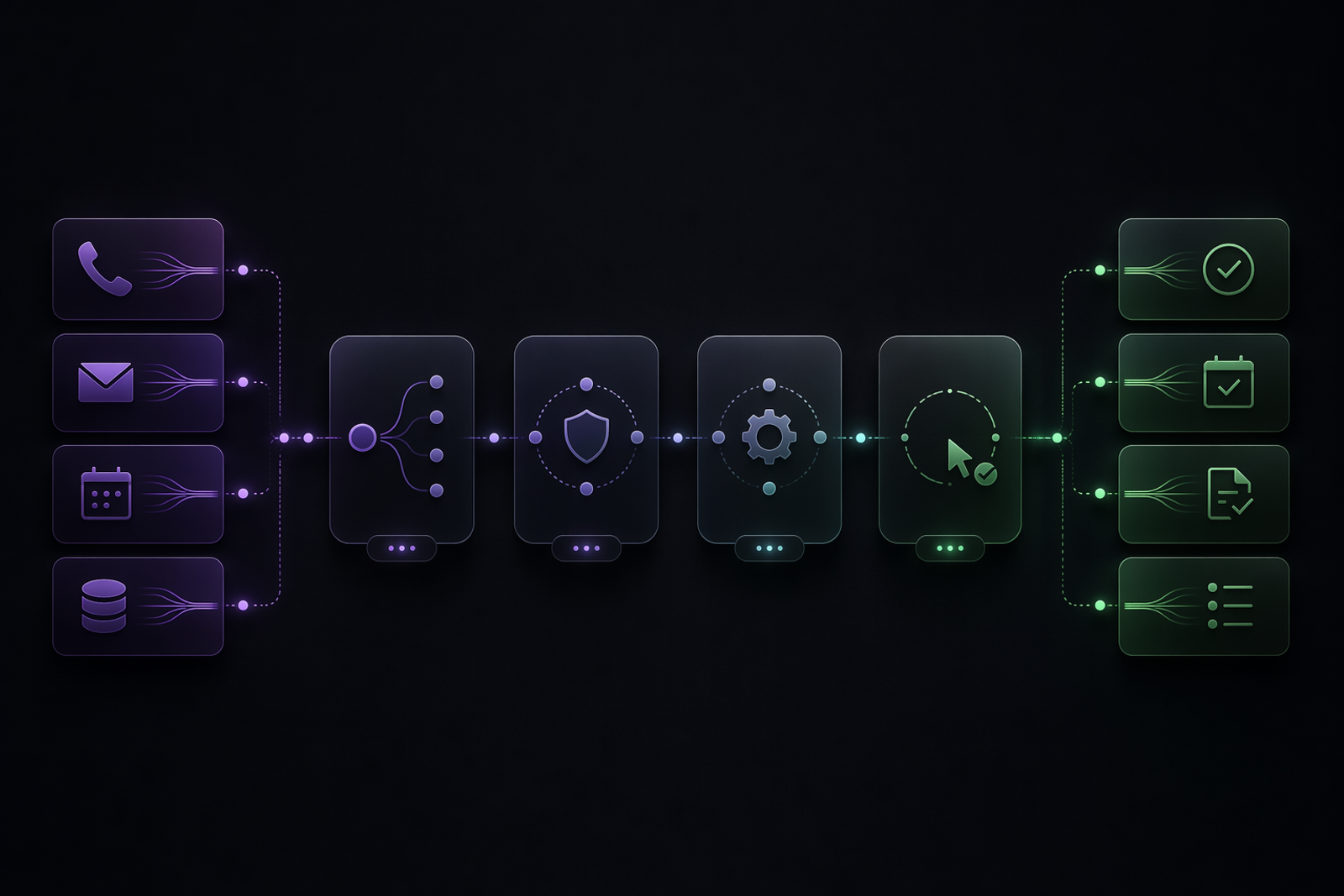
A custom AI agent costs more than model usage. The real budget covers workflow design, integrations, testing, hosting, token usage, maintenance, monitoring, and the feedback loop that makes the agent fit the way your team actually works.
That distinction matters. A simple automation moves data from one app to another. A custom agent handles messy input, asks follow-up questions, uses approved tools, creates handoffs, and knows when to stop.
If you only need a Zap between two tools, Akira Agent is probably not the right fit. If the workflow touches leads, bookings, quotes, CRM notes, support tickets, or customer data, pricing should be based on operational scope rather than a generic AI tool license.
The short answer
AI agent pricing depends on five drivers: workflow complexity, integration depth, human review requirements, usage volume, and how much the agent needs to improve after launch.
Two businesses can both ask for an "AI receptionist" and need very different builds. A restaurant booking overflow agent is narrower than a property management intake agent that triages repairs, collects photos, prepares contractor notes, updates a CRM, and escalates emergencies.
Common subscription models
Akira Agent uses subscription-based models because production agents need ongoing care. The first version is only the start. Real customers will phrase things strangely. Staff will correct the agent. Policies will change. Integrations will break or need updates.
| Model | Best fit | What to check |
| --- | --- | --- |
| Build subscription plus separate maintenance, hosting, and token fees | You want a visible build budget and usage-linked operating costs | Active build time, number of workflows, hosting per deployed agent, maintenance scope |
| All-inclusive subscription | You want one monthly model covering build, hosting, maintenance, and token usage | Usage limits, included changes, support response, integration scope |
Both models can support multiple or unlimited agents depending on the agreement. The limit is usually not the number of agent names. It is the amount of careful build and review work needed to make each workflow safe.
What should be included in the price?
A serious proposal should break the work into operational parts. If the quote is just "AI agent setup", ask for more detail.
Workflow audit
The audit identifies the first workflow: missed calls, quote intake, booking changes, customer follow-up, recruiting screening, support triage, or reporting admin. It should map the current steps, systems, exceptions, customer data, and human approval points.
Akira's guide to the custom AI agent launch timeline shows why the first build should be narrow enough to ship safely and valuable enough to matter.
Handoff rules
The expensive part is often not the model. It is the handoff logic. The agent needs rules for when it can answer, when it should ask another question, when it can create a draft, when it can write into a system, and when a human must review the next step.
For example, a quote agent for installers should not guess final pricing. It should collect the job details, prepare the CRM note, draft the reply, and flag anything that needs human approval.
Integrations
Price changes when the agent needs to work with calendars, email, phone systems, CRM, booking tools, helpdesks, Slack, HubSpot, Shopify, Fortnox, or custom databases.
A safer first version often starts by preparing summaries and drafts before the agent writes directly into business-critical systems.
Hosting, tokens, and maintenance
Token usage is the obvious cost. Running a production agent also means hosting, monitoring, prompt and policy updates, API changes, logging, error handling, and operational support.
Akira's public site describes a build subscription model with separate hosting and maintenance that typically scales with usage. Exact pricing should be confirmed during a workflow audit because volume, integrations, and data requirements change the budget.
Improvement after launch
When a custom agent "learns", that should not mean uncontrolled training on private customer data. In a safe implementation, improvement means client corrections are used to update instructions, handoff rules, escalation policy, tone, and evaluation examples.
This is why subscription pricing often makes more sense than a one-off project. The workshop will never contain all the weird real-world cases your customers will send.
GDPR and governance belong in the budget
If the agent handles names, phone numbers, addresses, booking notes, photos, candidate data, or customer history, the implementation needs data protection work. The Swedish Authority for Privacy Protection explains that GDPR applies when organisations process personal data, and its GDPR guidance is a useful starting point.
Akira Agent can often build GDPR-ready workflows with controlled infrastructure, data minimization, access control, retention rules, logging, and human review. That is careful wording. No vendor should promise lower operational risk when controls are designed up front or automatic compliance for every workflow.
The EU AI Act also adds governance expectations for AI systems. The European Commission describes it as a risk-based framework. For many service businesses, that means the agent should have clear boundaries, documentation, and human oversight from the first build.
When is a custom AI agent worth the cost?
A custom AI agent is worth scoping when the workflow happens every week, costs time or revenue, and can be measured. Look for missed calls, slow replies, incomplete quote requests, manual copying between systems, forgotten follow-ups, or cases that stall because nobody owns the first step.
Use this decision test:
- How often does the workflow happen?
- What does delay or error cost?
- Which part can an agent safely handle without taking over judgment?
- Who approves risky steps?
- What metric proves the first version worked?
For lead-response problems, Akira's AI agent ROI calculator is a useful starting point.
Workflows that are usually easier to price first
For installers, the first workflow might be quote intake: contact details, photos, address area, access constraints, preferred time windows, ROT/RUT questions in Sweden, and a draft for approval. See AI agents for installers.
For restaurants and hotels, the first workflow might be booking overflow: date, time, party size, special notes, after-hours calls, and escalation for complaints or large groups. See AI agents for hospitality.
For property managers, the first workflow might be maintenance intake: issue type, urgency, photos, access notes, resident updates, and contractor handoff.
For agencies, the first workflow might be client reporting and follow-up: collect updates, draft weekly reports, create next steps, and keep the account lead in approval.
Questions to ask before accepting an AI agent quote
Ask questions that expose the real scope:
- Which first workflow is included?
- Which systems are connected in version one?
- Can the agent write into the CRM, or only create drafts?
- How are logs, retention, and access handled?
- What are the handoff rules?
- How often are improvements included after launch?
- What happens when usage increases?
- Are tokens, hosting, and maintenance included or billed separately?
If a vendor only talks about the model, ask for the workflow plan. A custom AI agent is not a chatbot with a nicer demo.
CTA: start with one painful workflow
Book a 30-minute workflow audit. Bring one workflow that costs your team time every week: missed calls, quote intake, bookings, CRM updates, reporting, or customer follow-up.
You will leave with one concrete agent opportunity, the risks to check before building, and a clearer view of whether a build subscription or all-inclusive subscription fits. If the problem only needs a simple automation, we will say that too.
FAQ
How much does a custom AI agent cost?
The cost depends on workflow scope, integrations, usage volume, hosting, maintenance, token usage, data protection needs, and human review. The model bill is only one part of the total budget.
Is a subscription better than a one-off AI project?
For production workflows, usually yes. Customer language, internal rules, integrations, and edge cases change over time. A one-off build can prove the concept, but production agents need maintenance and feedback loops.
Can an AI agent be GDPR-ready?
Often, if the workflow is designed around data minimization, access control, retention, logging, vendor roles, and human review. It depends on the data and the process. Avoid vendors that promise automatic compliance for every case.
When should I use Zapier, Make, or n8n instead?
Use a simple automation tool when the job is deterministic: move this field from app A to app B, send a notification, create a row. Use a custom AI agent when the workflow needs conversation, qualification, judgment boundaries, tool use, and human handoff.