· Akira Agent
AI customer support agent for ecommerce: order questions, returns, and safe escalation
Ecommerce teams drown in repetitive order and return questions. An AI support agent can answer routine cases, check approved sources, and escalate exceptions before customers get angry.
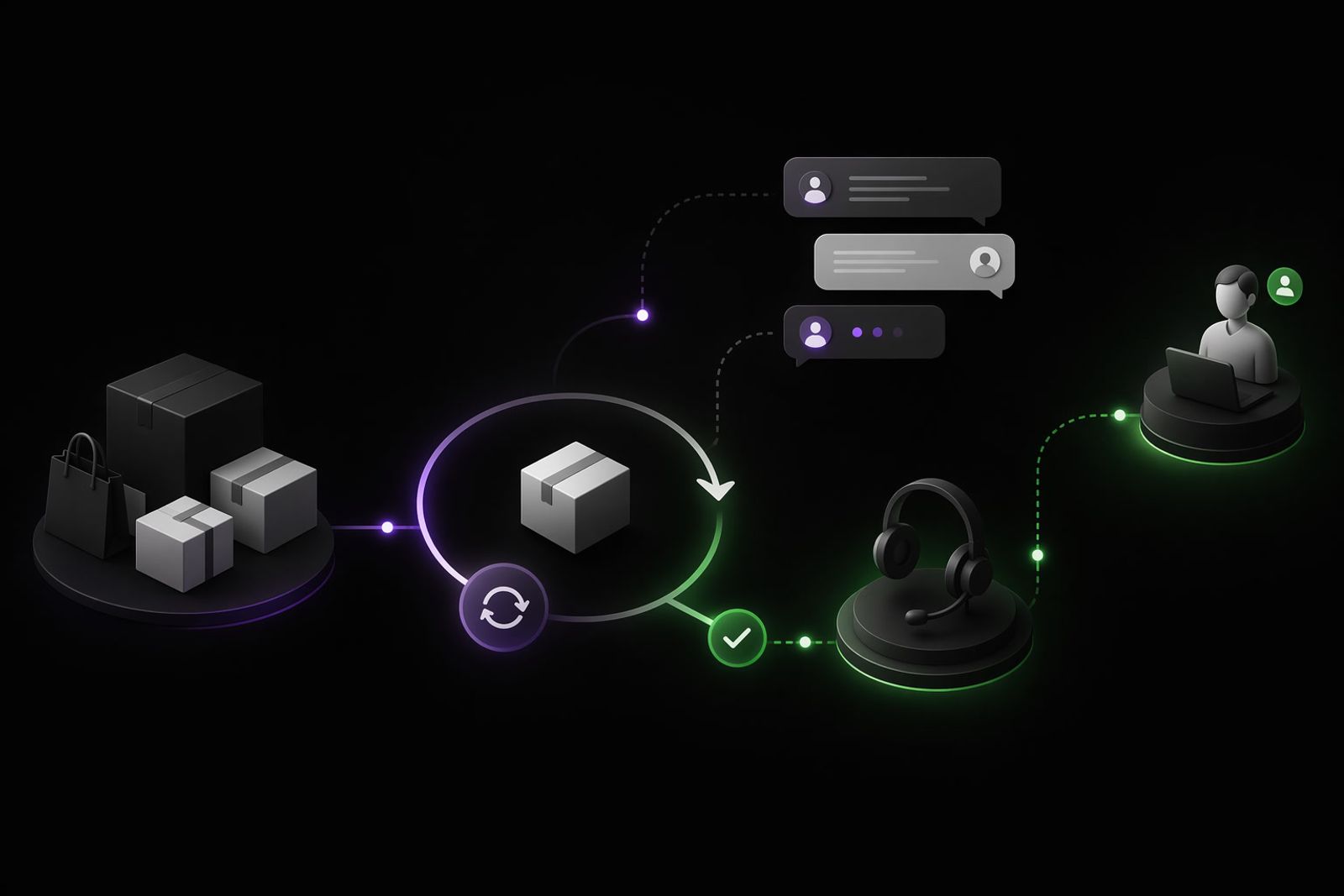
Ecommerce support has a repetition problem
Most ecommerce support queues are not full of mysteries. They are full of the same questions, asked with different levels of stress.
Where is my order? Can I return this? When will I get a refund? I entered the wrong address. The package says delivered but I do not have it. The discount code failed.
Humans should handle judgement, exceptions and annoyed customers. They should not spend the day copying tracking links and pasting return-policy snippets.
That is the job for an AI customer support agent.
What the agent should handle first
Start with questions where the answer comes from a trusted source, not from the model's imagination.
Good first workflows:
- order status lookup
- return eligibility checks against your policy
- refund status explanations
- delivery-delay triage
- address-change requests before fulfilment
- warranty or exchange intake
- ticket creation with a clean summary
- escalation when a customer is angry or the policy is unclear
The agent should retrieve facts from your store, helpdesk, order system and policy pages. It should not make up exceptions because the customer sounds persuasive.
Returns need policy guardrails
Returns are where ecommerce support gets expensive. They touch customer expectations, consumer rights, warehouse operations and margin.
In Sweden, Konsumentverket publishes business guidance for ecommerce, and EU consumer rules such as the Consumer Rights Directive sit behind many distance-selling obligations. Sweden's Distance and Off-Premises Contracts Act is also relevant for online sales.
An AI agent should not replace legal advice. It should apply your approved return policy, quote the source, and escalate exceptions.
Useful rules:
- If the item is clearly within the standard return window, guide the customer through the next step.
- If the item is outside the window, explain the policy and offer human review.
- If the customer mentions damage, safety, medical, fraud or payment dispute, escalate.
- If the policy source is missing or contradictory, do not answer. Create a ticket.
Order status is the easiest win
Order status questions are perfect because they are usually factual. The agent can ask for an order number or email, check the commerce platform, and reply with the current state.
Whether you use Shopify, WooCommerce, Centra, a custom ERP or another stack, the principle is the same: the answer should come from the order system, not from a guessed response.
If the package is delayed, the agent can explain the status and create a follow-up task. If the package is marked delivered but the customer says it never arrived, escalate.
The support agent's handoff summary matters
Bad automation creates more work because humans have to read the whole conversation again.
A useful handoff summary includes:
- customer name and order number
- issue type
- policy source used
- current order or return status
- what the agent already told the customer
- what the customer wants next
- urgency and sentiment
- recommended next action
That turns a messy chat into a solvable ticket.
GDPR and customer data
Ecommerce support agents handle personal data: names, addresses, emails, order history, payment-related references and sometimes sensitive customer messages. IMY's GDPR guidance applies when Swedish companies process this data.
Keep permissions narrow. The agent may need to read order status, but it probably does not need full payment details. It may need to create a return request, but not edit customer records freely.
The safest first version reads more than it writes. Add write actions only after the team trusts the workflow.
Decision math for ecommerce support
Use your own numbers. A simple version:
- monthly support tickets: 1,200
- share that are order/return/policy questions: 55%
- average human handling time: 4 minutes
- target deflection or assisted-resolution rate: 35%
Potential assisted minutes: 1,200 × 0.55 × 4 × 0.35 = 924 minutes per month.
That is about 15 hours. If the agent also improves response time during evenings and weekends, the value may be higher than time saved alone.
What not to automate
Do not let the first agent handle:
- chargebacks or payment disputes
- suspected fraud
- legal threats
- angry VIP customers
- complex warranty interpretation
- medical, safety or regulated product advice
- blanket exceptions to return policy
Those should go to humans fast, with context.
Where Akira fits
Akira builds custom AI agents for workflows that cross systems and require sensible handoff. For ecommerce, that often means store data, helpdesk tickets, policy retrieval, email or chat, and escalation rules.
If you want to explore ecommerce-specific automation, start with Akira's ecommerce AI agent page.
Book the audit
Book the 30-minute Akira Agent audit if your team is buried in order and return questions.
We will identify the repetitive support workflow, define the policy sources and escalation rules, and decide whether an AI support agent is worth building.