· Akira Agent
AI agent or Voiceflow? When a builder is not enough for business workflows
When a conversation builder is enough, and when a company needs a custom AI agent with workflow ownership, integrations, and safe handoffs.
AI agent or Voiceflow? When a builder is not enough for business workflows
Short answer: a builder is enough for simple bot dialogs, but a custom AI agent is needed when the workflow requires systems, ownership, handoff, and improvement over time.
Why this is not a normal chatbot question
Voiceflow and similar builders can be the right choice when you want to design a clear bot conversation, test a knowledge base, or answer repeated questions faster. They become weaker when the real problem is not the conversation itself, but what needs to happen after it.
A custom AI agent becomes relevant when the workflow requires system access, prioritization, ownership, human stop rules, and improvement over time. Then a polished dialog is not enough. The agent has to fit how the business actually works.
The workflow the agent should own
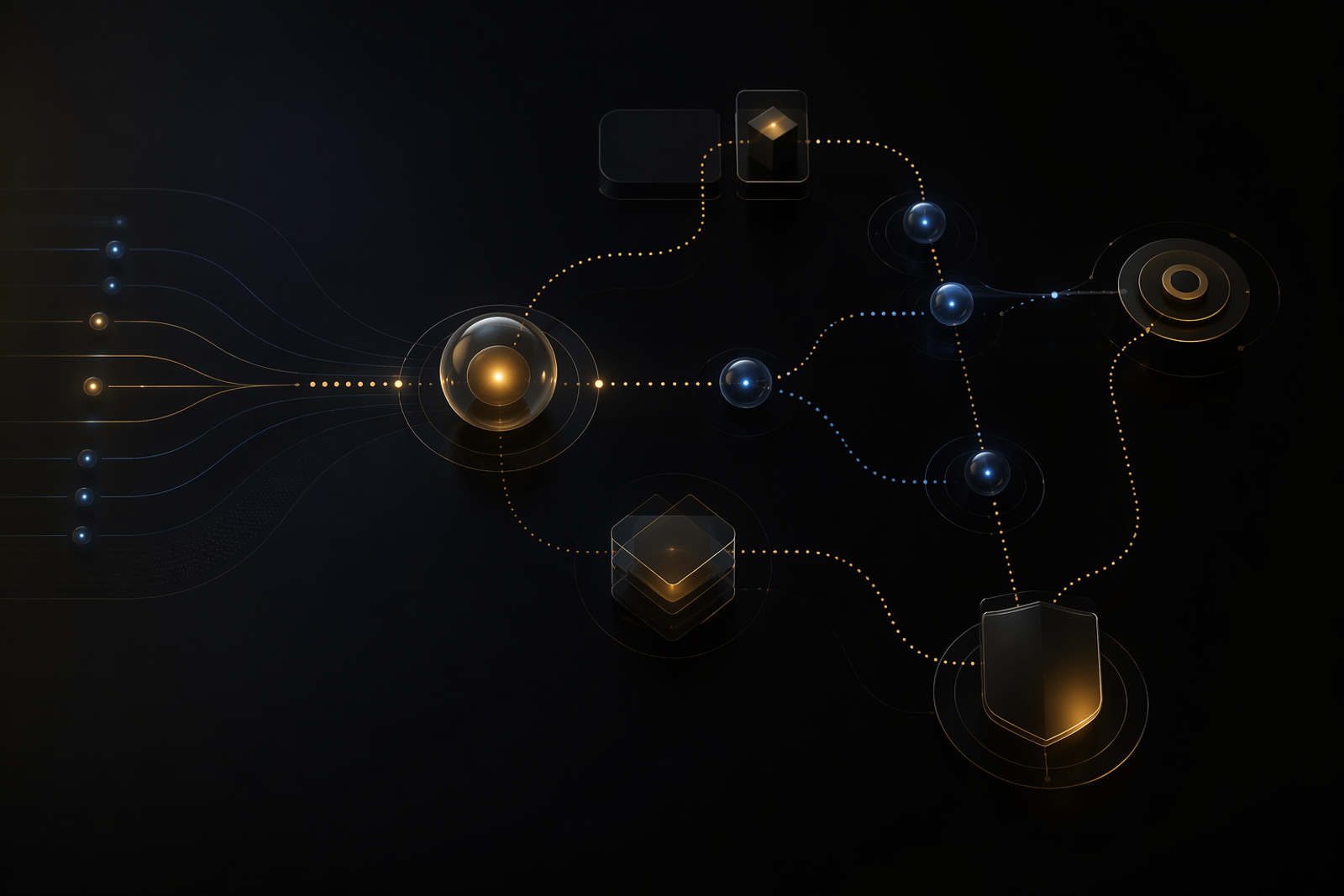
Start by separating the conversation flow from the operations flow. A conversation flow answers a question. An operations flow collects context, checks status, weighs risk, suggests the next step, and hands off to the right person.
For companies handling customer workflows, the difference is practical. If the agent connects to CRM, ticketing, calendars, quote inputs, or customer history, the project needs data boundaries, access control, logging, and handoff rules from the start.
Controls to build in
A builder can give you a fast prototype. An Akira agent is built around operations: approved sources, what the agent may suggest, when it must stop, how feedback becomes improvement, and who owns quality after launch.
That does not make platforms wrong. It means they fit best when the problem is the conversation. If the problem is ownership between teams, systems, and the customer promise, the agent design needs to be more operational.
What leadership should measure
Do not only measure automated reply volume. Measure how many cases received the right context, how often the handoff needed correction, time to next step, and whether the team trusts the agent summary.
If the team still has to search three systems and fix every handoff, you have built a bot on top of the same old friction.
When Akira Agent fits
Akira Agent fits when you want a premium custom agent that is built, operated, and improved as part of the business. It is probably not the right level if you only need a simple bot dialog or a quick form flow.
If the workflow affects sales, support, follow-up, or internal handoffs, it is worth mapping the agent as an operational capability, not as another builder.
Checklist
- Decide whether the problem is the dialog or the work after the dialog
- List which systems and sources the agent needs to read
- Set clear stop rules for contracts, customer data, and decisions
- Measure handoff quality and corrections after launch
- Use a builder for simple dialogs and a custom agent for operational workflows
Related Akira reading
Sources and further reading
Next step
Book a 30-minute workflow audit. You will leave with one concrete agent flow, the risks to check, and a clear first scope.
If you only need a simple bot dialog, a builder is probably the right level. If the workflow requires ownership, multiple systems, and improvement over time, Akira Agent is the right level to map.